Ulubione

Products (0)

Nie znaleziono produktów dla ""
Cart (0)

Your cart is empty

Use the search or browse promotional products.

Empty Cart
Discover our products

Tickets (0)

Your tickets cart is empty

Browse our events and add tickets to your cart.

Empty Ticket Cart
Discover events
Home / Articles / Wino / Riesling Weeks 2026 – what you should know about Riesling and which wine to choose

Riesling Weeks 2026 – what you should know about Riesling and which wine to choose

Author:Redakcja
Published:16.06.2026
Read time:3 Minutes
Riesling Weeks 2026 – what you should know about Riesling and which wine to choose
From June 22 to July 19, 2026, the Polish edition of Riesling Weeks – already the twelfth – is taking place. This international campaign by the German Wine Institute promotes German wines each year in more than a dozen countries around the world. In Poland, it is a nationwide event: restaurants, wine bars, specialist shops and importers from across the country are preparing special offers and events for the occasion.

What is riesling?

Riesling is a white grape variety originating from the Rhine in Germany – and that is where it is most commonly cultivated. It is distinguished by its high, fresh acidity and intense aromatics: citrus, stone fruits, floral notes, sometimes honey. With age, mature rieslings develop a characteristic petrol note, by which they are easily recognised. It is also one of the few white varieties that can age in the bottle for many years.

Riesling – dry or sweet?

Both. Riesling comes in the full spectrum: from completely dry wines (trocken), through off-dry, to sweet ones – such as late-harvest wines or ice wines. The secret lies in the acidity: it is pronounced enough to balance the sugar, which is why even sweeter rieslings are not cloying, but fresh and full of energy.

Where do the best rieslings come from? German regions

The character of riesling changes with the region:

  • Mosel – steep, slate slopes above the river produce lighter wines with a lower alcohol content, with delicate sweetness and pronounced minerality.

  • Palatinate (Pfalz) – a warmer region in which rieslings have a riper fruitiness; here they tend to be fuller and more often dry.

  • Franconia (Franken) – limestone soils (muschelkalk) produce mineral wines that are usually dry.

What to pair riesling with?

It is one of the most versatile table wines. Dry rieslings work wonderfully with fish, seafood, poultry and light salads. They feel particularly at home in the company of Asian cuisine and spicy dishes – the acidity and a hint of fruity sweetness soften the sharpness of the spices. Sweeter styles are worth serving with blue cheeses and fruit desserts.

Our rieslings for Riesling Weeks 2026

In our range you will find a wide selection of German rieslings – from various regions and in many styles. To see the diversity this category offers, we encourage you to take a look at our recommendations:

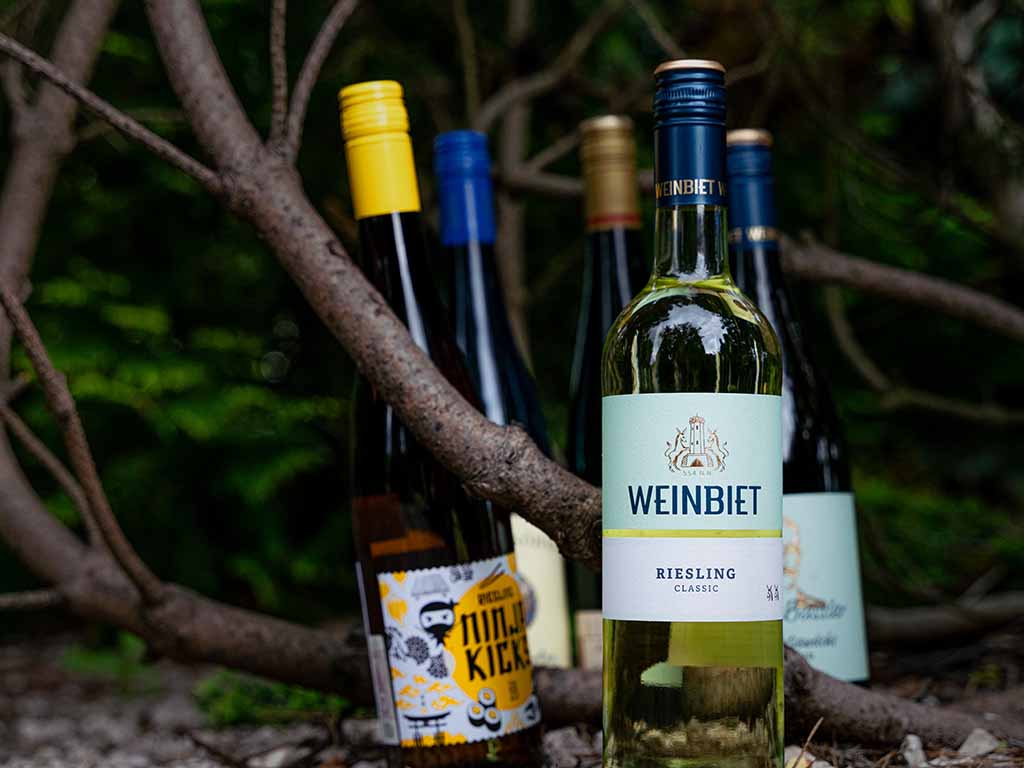
  • Weinbiet Mussbacher Riesling Kabinett Trocken (Palatinate) – a dry wine, fresh and crisp, full of fruity aromas with a well-balanced acidity. It pairs wonderfully with fish, salads and light white meats.

  • Divino Riesling Spätlese (Franconia) – a fuller, fruity riesling from Franconia's limestone soils, with aromas of apricot, yellow apples and pineapple. The perceptible sweetness here is balanced by fresh acidity, and the finish is long and fruity.

  • Schmitt Söhne Auslese Riesling (Mosel) – a sweet wine composed of late-harvest grapes, with notes of ripe apricots, peach and honey. Full-bodied, with a long finish – excellent with blue cheeses, fruits and desserts.

We also encourage you to check out all the German rieslings in our range.

We invite you to our stores throughout the entire Riesling Weeks period, from 22 June to 19 July. It is a good time to discover just how many different faces a single variety can have.

By clicking "Accept", you agree to the storage of cookies on your device to enhance site navigation, analyze site usage, and assist in our marketing efforts. Learn more